
How to Choose an Office Cleaning Company in London: 2026 Commercial Cleaning Checklist
Choosing an office cleaning company in London is about far more than comparing hourly rates.
A professional cleaning contractor needs to deliver consistent standards, reliable staff, appropriate health and safety procedures, clear communication and dependable cover when something goes wrong. The cheapest quotation can quickly become expensive if cleaning standards fall, complaints increase or your team has to spend time managing the contractor.
Whether you manage a small professional office, a multi-floor corporate workplace, a medical practice, an estate agency or multiple commercial properties, this 2026 checklist explains what to look for when comparing office cleaning companies in London.
It covers the questions to ask, what should be included in a commercial cleaning contract, how to compare quotations and the warning signs to look out for before appointing a contractor.
If you are ready to arrange a professional service, see our commercial office cleaning services in London.

What Makes a Good Office Cleaning Company?
A professional office cleaning company should provide more than cleaners and cleaning products.
A properly managed commercial cleaning service should have a clear specification, trained and appropriately vetted cleaning staff, suitable insurance, documented health and safety procedures, quality control and a reliable process for dealing with problems.
Before choosing a contractor, look beyond the price and consider:
Insurance and relevant accreditation
Staff recruitment and vetting procedures
Cleaning methods and products
COSHH and health and safety procedures
Quality inspections
Sickness and holiday cover
Communication and account management
Contract terms and cancellation arrangements
Flexibility around your working hours
Ability to provide additional specialist cleaning when required
Whether cleaning work is carried out directly or subcontracted
The right contractor should be able to explain all of these clearly before you sign a contract.
12 Things to Check Before Hiring an Office Cleaning Company
1. Check the Company's Insurance
Ask the cleaning company to provide evidence of appropriate insurance before work begins.
For commercial cleaning contracts, this will commonly include public liability insurance, with employers' liability insurance relevant where the company employs staff.
Do not rely solely on a statement such as "fully insured" on a website. A professional contractor should be able to provide documentation when requested.
Ask:
What insurance cover do you have?
Can you provide your current certificates?
Does the level of cover suit our premises and contract?
2. Check Accreditation and Professional Standards
Accreditation can provide an additional indication that a cleaning company has established procedures and takes compliance seriously. However, accreditation should not be the only factor you consider. Ask what the accreditation covers, when it was awarded and whether it is currently valid. At Silkway Cleaning, we maintain recognised industry accreditation alongside our insurance, operational procedures and cleaning standards.
3. Ask How Cleaning Staff Are Recruited and Vetted
Office cleaners can have access to commercial premises, equipment, documents and other areas that may not be accessible to the general public. Ask how cleaners are recruited, trained and vetted. Depending on the premises and the nature of the work, you may also want to ask whether appropriate background checks are carried out. For environments such as offices handling sensitive information, professional practices or other controlled premises, staff vetting may be particularly important.
Ask:
Are cleaners directly employed or subcontracted?
How are cleaners vetted?
What training do cleaners receive?
Is there a consistent team assigned to the building?
4. Find Out Whether the Company Uses Subcontractors
This is an important question that is often overlooked. If you appoint a cleaning company, you should understand who will actually be carrying out the work. Some businesses prefer a contractor that manages its own cleaning teams because this can provide greater consistency and clearer accountability.
Ask:
"Do you subcontract any of the cleaning work?"
Then establish who is responsible for recruitment, training, supervision and quality control.
At Silkway Cleaning, we do not subcontract our cleaning work. This allows us to maintain direct control over the teams delivering our services.
5. Insist on a Proper Site Survey Where Appropriate
A professional quotation should be based on the actual requirements of your premises.
Office size is only one factor.
A contractor may also need to consider:
Number of floors
Washroom facilities
Kitchen and breakout areas
Reception areas
Meeting rooms
Staff numbers
Footfall
Floor surfaces
Carpeted areas
Access arrangements
Security requirements
Cleaning times
Frequency of service
Consumables
Specialist cleaning requirements
A site survey allows the contractor to understand these requirements before calculating the cleaning specification and price.Be cautious of a contractor quoting a detailed fixed price without asking meaningful questions about your premises.
6. Ask for a Written Cleaning Specification
A professional cleaning contract should clearly explain what is included. Avoid vague descriptions such as:
"General office cleaning."
A proper specification should identify the areas and tasks covered and, where appropriate, how frequently those tasks are completed.
For example:
Daily tasks
Vacuuming
Mopping
Cleaning washrooms
Cleaning kitchen and breakout areas
Emptying bins
Cleaning high-touch areas
Cleaning reception and common areas
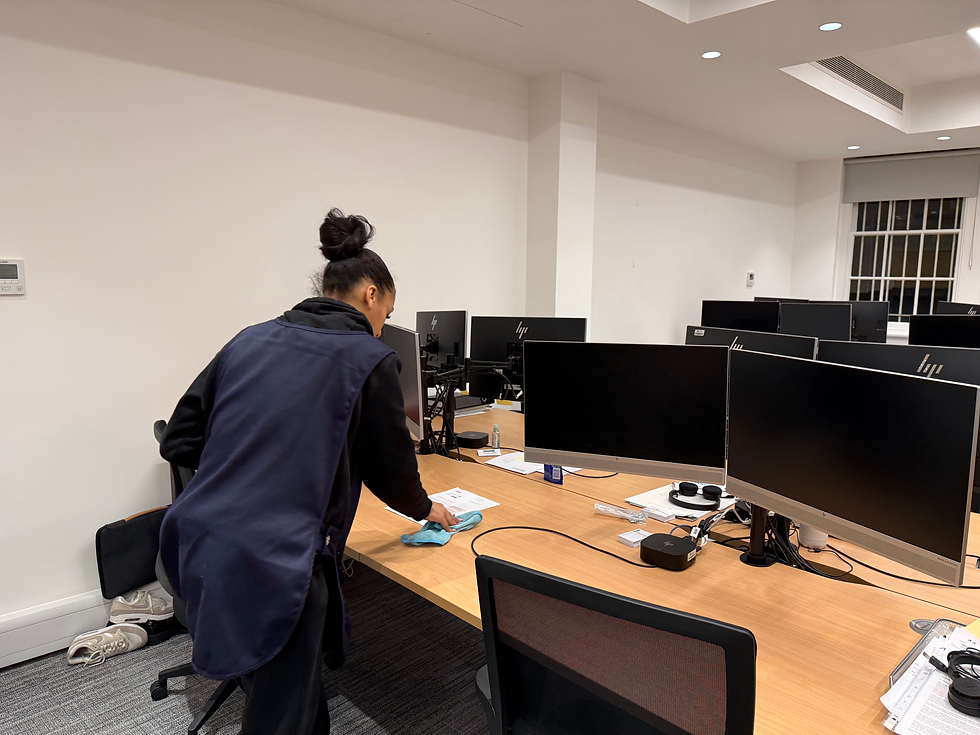
Cleaning desks and surfaces where included within the specification
Periodic tasks
Internal window cleaning
Carpet cleaning
Upholstery cleaning
High-level dusting
Deep cleaning
Machine floor cleaning
The exact specification should reflect the building rather than being copied from another contract.
7. Check COSHH and Health & Safety Procedures
Commercial cleaning involves the use of chemicals, equipment and different cleaning methods.
Ask how the contractor manages health and safety and how cleaning products are assessed and controlled.
You may want to ask about:
COSHH assessments
Product safety data
Risk assessments
Method statements
Staff training
Safe storage of chemicals
Equipment training
Incident reporting procedures
A professional contractor should be able to explain how these processes are managed.
8. Understand What Happens When a Cleaner Is Off Sick
This is one of the most important questions to ask before signing a cleaning contract.
Your office still needs cleaning if a member of the cleaning team is ill or takes annual leave.
Ask:
"What happens if our usual cleaner cannot attend?"
A properly managed contractor should have a process for arranging suitable cover and communicating any changes. Do not assume that sickness cover is automatically included. Confirm it in writing.
9. Ask How Quality Is Checked
Hiring cleaners is only part of delivering a commercial cleaning service.
The contractor also needs to monitor the standard of work.
Ask:
How often are inspections carried out?
Who conducts them?
Is there a cleaning checklist?
How are issues recorded?
How quickly are complaints addressed?
Who is responsible for managing the account?
Regular quality inspections can help identify problems before they become recurring complaints.
For larger offices or managed properties, you may also want agreed KPIs or periodic service reviews.
10. Check Communication and Account Management
A cleaning company should be easy to contact when something needs attention.
Before signing, establish:
Who is your main contact?
How do you report an issue?
How quickly are urgent issues handled?
Who manages the cleaning team?
Are regular service reviews available?
Is there a supervisor or account manager?
A low price is of little value if your facilities or office manager has to chase the contractor every time something is missed.
11. Check Whether the Contractor Can Handle Additional Cleaning
Your office may occasionally require more than routine cleaning.
For example:
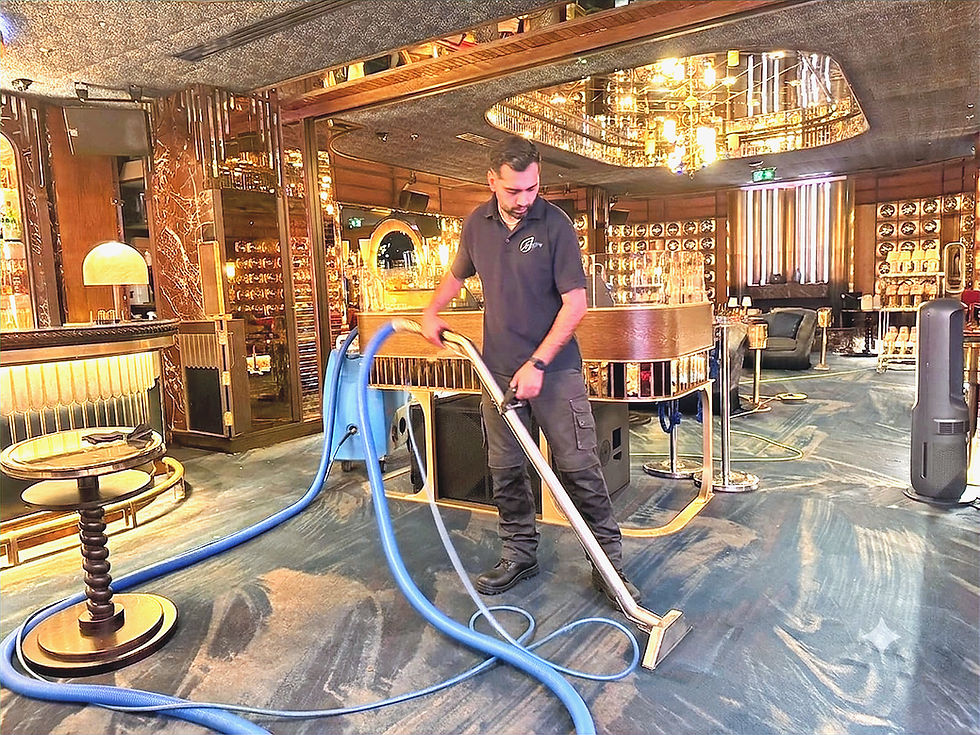
Carpet cleaning
Upholstery cleaning
Curtain cleaning
Window cleaning
Mattress cleaning
Deep cleaning
Jet washing
End-of-tenancy cleaning
Periodic floor cleaning
Using one established contractor for multiple requirements can simplify communication and contract management. When comparing office cleaning companies, ask whether specialist services are available and whether they can be scheduled alongside your regular cleaning contract.
12. Read the Contract Before You Sign
Do not focus solely on the monthly price.
Check the contract for:
Cleaning frequency
Working hours
Cleaning specification
Pricing
Payment terms
Contract duration
Notice period
Sickness cover
Holiday cover
Equipment responsibilities
Cleaning products
Consumables
Additional services
Complaint procedures
Quality inspections
Changes to service requirements
Everything that matters to you should be clearly documented.
Questions to Ask an Office Cleaning Company Before Hiring Them
Before requesting a quotation, prepare a short list of questions.
Commercial cleaning contractor checklist
Are you fully insured?
Do you hold relevant accreditation?
Are your cleaners directly employed or subcontracted?
How are your cleaners vetted?
What training do your cleaners receive?
Do you carry out a site survey before quoting?
Can you provide a detailed cleaning specification?
How do you manage sickness and holiday cover?
How often do you inspect cleaning standards?
Who will manage our account?
How do we report problems?
Do you provide COSHH and risk assessment documentation?
What cleaning equipment and products are included?
Can you provide periodic specialist cleaning?
What are your contract and notice terms?
The answers can tell you considerably more about a contractor than the hourly rate alone.
How Much Does Office Cleaning Cost in London in 2026?
There is no single price for office cleaning in London.
The cost of a commercial cleaning contract depends on factors including:
Office size
Cleaning frequency
Number of cleaners required
Cleaning hours
Building layout
Number of washrooms and kitchens
Footfall
Location and access
Cleaning specification
Equipment requirements
Consumables
Specialist cleaning requirements
For this reason, comparing companies purely on an hourly rate can be misleading. Two contractors may quote different prices because they have allowed for different staffing levels, cleaning frequencies or specifications.
Compare the total service, not just the hourly rate.
A lower quotation may appear attractive until you discover that certain tasks, equipment, consumables or periodic cleaning are excluded. When comparing quotations, ask each contractor to price the same specification. That gives you a much more meaningful comparison.
For more information, see our guide to office cleaning costs in London.

What Should Be Included in an Office Cleaning Contract?
A well-structured commercial cleaning agreement should clearly define the service being provided. Depending on the contract, this may include:
Routine cleaning
Offices
Reception areas
Meeting rooms
Kitchens
Breakout spaces
Washrooms
Corridors
Stairs
Communal areas
Cleaning frequencies
Tasks should be assigned appropriate frequencies rather than simply described as "regular cleaning."
For example:
Daily
Several times per week
Weekly
Monthly
Quarterly
Periodically
Management
The contract should also explain how the service will be supervised and how issues will be handled. This can include:
Site inspections
Supervisory visits
Cleaning checklists
Client feedback
Corrective actions
Account reviews
The more clearly the service is defined, the easier it is for both parties to understand what successful delivery looks like.
Office Cleaning Company Comparison Checklist
When comparing quotations, use the same criteria for every contractor.
Requirement | Company A | Company B | Company C |
Insurance verified | ☐ | ☐ | ☐ |
Accreditation checked | ☐ | ☐ | ☐ |
Staff vetting explained | ☐ | ☐ | ☐ |
Direct employees/subcontractors confirmed | ☐ | ☐ | ☐ |
Site survey completed | ☐ | ☐ | ☐ |
Detailed specification provided | ☐ | ☐ | ☐ |
Cleaning frequency defined | ☐ | ☐ | ☐ |
Sickness cover explained | ☐ | ☐ | ☐ |
Quality inspections included | ☐ | ☐ | ☐ |
Dedicated contact provided | ☐ | ☐ | ☐ |
COSHH/H&S procedures explained | ☐ | ☐ | ☐ |
Equipment responsibilities confirmed | ☐ | ☐ | ☐ |
Specialist cleaning available | ☐ | ☐ | ☐ |
Contract terms clear | ☐ | ☐ | ☐ |
Price based on the same specification | ☐ | ☐ | ☐ |
This simple comparison can make it much easier to identify what you are actually receiving for your money.
Case Study: Improving Cleaning Consistency in a London Office
Price is only one part of a successful commercial cleaning contract.
For example, an estate agency in Islington was experiencing inconsistent cleaning standards, including issues with dust, breakout areas and general presentation.
The solution involved introducing a structured cleaning plan, defined touchpoint cleaning and regular supervisory inspections. The result was a reported 40% reduction in cleaning complaints, alongside more consistent standards across reception and meeting areas.
The lesson is important: improving cleaning quality is not always about simply adding more cleaning hours. In many cases, better planning, supervision and accountability can make a significant difference.
For more information about our approach, see our commercial office cleaning services in London.
Office Cleaning Across London's Main Business Areas
London's commercial properties have very different cleaning requirements.
A professional services office in the City may require early-morning or evening cleaning around busy working schedules. A client-facing office in Mayfair or Marylebone may place particular emphasis on presentation and reception areas.
Other major commercial locations include:

Westminster
Mayfair
Marylebone
King's Cross
Kensington
Chelsea
Hammersmith
Ealing
The important consideration is not simply where the office is located, but whether the contractor can provide a reliable service that fits the building, working pattern and operational requirements.
Silkway Cleaning provides commercial cleaning services across London, including office cleaning, communal cleaning and specialist cleaning services.
Office Cleaning FAQs
How do I choose an office cleaning company in London?
Start by comparing insurance, accreditation, staff vetting, cleaning specifications, quality control, sickness cover, communication, contract terms and price. Request a site survey where appropriate and make sure every contractor is quoting against a comparable specification.
How much does office cleaning cost in London?
There is no fixed price because commercial cleaning costs depend on office size, frequency, staffing, specification, access and other requirements. The best way to compare prices is to ask several contractors to quote against the same detailed cleaning specification.
Should an office cleaning company carry out a site survey?
For many commercial contracts, a site survey is useful because it allows the contractor to assess the building, cleaning requirements, access arrangements and working conditions before preparing a quotation.
Should office cleaners be DBS checked?
DBS checks are not automatically required for every office cleaning role. However, businesses should ask how cleaners are recruited and vetted and consider whether additional checks are appropriate for their premises and the nature of the work.
Do office cleaning companies subcontract cleaners?
Some cleaning companies use subcontractors while others manage their own cleaning teams. Ask the contractor directly and establish who is responsible for recruitment, training, supervision and quality control.
Silkway Cleaning does not subcontract its cleaning work.
What should an office cleaning contract include?
It should clearly define the cleaning specification, frequency, working hours, staffing arrangements, pricing, payment terms, quality control, cover arrangements, responsibilities and contract terms.
How often should an office be professionally cleaned?
The appropriate frequency depends on the size of the office, number of employees, footfall, facilities and required standard. High-traffic and client-facing workplaces may require daily cleaning, while smaller offices may require fewer visits.
What is the biggest red flag when choosing a cleaning company?
Vague answers are a warning sign. A contractor should be able to explain what is included, who will carry out the work, how quality is monitored, what happens when cleaners are absent and how problems will be resolved.
Choosing the Right Commercial Cleaning Contractor
The cheapest office cleaning quotation is not necessarily the lowest-cost option over the life of a contract. A reliable contractor should give you confidence that the agreed standard will be delivered consistently, that problems will be dealt with quickly and that you have a clear point of contact when you need support. Before appointing an office cleaning company, compare the whole service rather than simply the hourly rate.
Check the contractor's insurance, accreditation, staff vetting, cleaning specification, quality control, cover arrangements, communication and contract terms.
Then make sure you are comparing like-for-like quotations.
Looking for Office Cleaning in London?
Silkway Cleaning provides professional commercial office cleaning across London for businesses, property managers, professional organisations and commercial premises.
Our services can be tailored around your building, operating hours and cleaning requirements, with regular quality control and additional specialist cleaning available when required.
To discuss your requirements or arrange a quotation, visit our commercial office cleaning services in London.


Comments