
How Often Should an Office Be Cleaned? A Practical Guide for London Businesses

How Often Should an Office Be Cleaned?
If you ask ten business owners how often an office should be cleaned, you'll probably receive ten different answers. Some will say once a week is enough. Others insist that every office should be cleaned daily.Many simply continue with whatever cleaning schedule the previous tenant or cleaning contractor recommended.
After assessing commercial workplaces across London, we've found that none of these approaches consistently delivers the best results. The cleanest offices aren't necessarily the ones cleaned most often. They're the ones cleaned according to how the workplace is actually used.
A law firm welcoming clients throughout the day has different priorities from a technology company operating hybrid working. A serviced office with multiple businesses sharing communal facilities creates different cleaning challenges from a privately occupied office with a small team.
Yet many businesses use exactly the same cleaning specification year after year, even when staff numbers, working patterns and office layouts have changed. That is where problems begin.
Cleaning should never be based on habit. It should be based on occupancy, footfall, workplace activity and the expectations of the people using the building.
This guide explains how professional cleaning schedules are developed, how often each part of an office should be cleaned, when deep cleaning becomes worthwhile and how businesses can maintain consistently high standards without paying for unnecessary cleaning hours.
If you're looking for a professional cleaning company after reading this guide, you can learn more about our Office Cleaning London service and how we create tailored cleaning programmes for businesses across London.
Quick Answer
For most occupied offices, the following schedule provides an excellent starting point.
Area | Recommended Frequency |
Reception | Daily |
Kitchens | Daily |
Washrooms | Daily |
Bins | Daily |
High-touch surfaces | Daily |
Meeting rooms | Daily or after heavy use |
Open-plan offices | 3–5 times per week |
Internal glass | Weekly |
High-level dusting | Monthly |
Professional carpet cleaning | Every 6–12 months |
Upholstery cleaning | Every 6–12 months |
Full office deep clean | Every 6–12 months (or more frequently for busy workplaces) |
These are professional recommendations rather than legal requirements. Every office should have a cleaning schedule tailored to its own occupancy, layout and daily activity.
Why There Is No Universal Office Cleaning Schedule
One of the first questions we hear during enquiries is:
"Can you just tell us how many times a week our office should be cleaned?"
It's a perfectly reasonable question. Unfortunately, there isn't a simple answer. Professional cleaning companies don't build cleaning schedules by looking only at the size of the office.
Instead, they look at how the workplace functions every day.
For example:
How many employees attend on your busiest day?
How many visitors do you receive?
Is the kitchen heavily used?
Do employees hot-desk?
How many washrooms are shared?
Which areas generate the most complaints?
These answers tell us far more than the number of square metres. We've inspected relatively small offices requiring daily professional cleaning because they hosted meetings all day.
We've also assessed much larger workplaces that maintained excellent standards with fewer visits because occupancy was spread across the week. The lesson is straightforward:
Cleaning frequency should follow workplace activity - not assumptions.
Expert Insight
Many businesses assume that increasing cleaning hours automatically improves cleanliness.
In practice, changing when cleaning takes place often produces better results than simply extending the length of every visit.
For example, if Tuesdays, Wednesdays and Thursdays are your busiest office days, allocating the same cleaning time on quieter Mondays rarely makes operational sense.
The Four Factors That Have the Greatest Impact
1. Daily Occupancy
Occupancy influences almost every aspect of workplace cleanliness.
More people create:
More waste
More kitchen use
More washroom traffic
More fingerprints
More floor traffic
Two offices of identical size can have completely different cleaning requirements simply because one accommodates twice as many people.
2. Visitor Footfall
Visitors are frequently overlooked.
Clients.
Suppliers.
Interview candidates.
Contractors.
Delivery drivers.
Every visitor increases activity around reception areas, entrances and meeting rooms.
Businesses that regularly welcome visitors often require higher presentation standards than offices occupied solely by employees.
3. Shared Facilities
Shared kitchens, breakout areas and hot-desking arrangements usually require more frequent attention than individually assigned workspaces.
These communal spaces are often where employees judge the overall cleanliness of an office.
4. Business Expectations
Presentation standards vary.
A legal practice, financial consultancy or design agency may expect reception and meeting rooms to remain immaculate throughout the day because clients regularly visit.
Other organisations may prioritise operational efficiency over presentation.
Neither approach is right or wrong—but cleaning schedules should reflect those expectations.
Recommended Cleaning Frequency by Office Type
Office Type | Daily Priorities | Deep Cleaning | Carpet Cleaning |
Law Firms | Reception, meeting rooms, washrooms | Every 6 months | Every 6 months |
Financial Offices | Reception, kitchens, washrooms, touchpoints | Every 3–6 months | Every 3–6 months |
Technology Companies | Shared desks, kitchens, breakout areas | Every 6 months | Every 6 months |
Co-working Spaces | Kitchens, washrooms, shared desks | Quarterly | Every 3–6 months |
Serviced Offices | Reception, communal areas, washrooms | Every 6 months | Every 6–12 months |
Small Private Offices | Kitchens, washrooms, bins | Every 12 months | Every 12 months |
These are starting points. Every workplace should be assessed individually before deciding on a cleaning programme.

Reception Areas
Reception creates the first impression of your business.
Within seconds, visitors notice:
Dust
Dirty flooring
Fingerprints on glass
Overflowing bins
Smudged entrance doors
General presentation
A professionally maintained reception communicates attention to detail before a conversation even begins.
Typical daily tasks include:
Vacuuming or mopping
Dusting furniture
Cleaning reception desks
Emptying bins
Spot cleaning glass
Removing fingerprints
Straightening furniture
Expert Insight
One interesting pattern we've noticed during workplace assessments is that reception areas rarely generate the highest number of complaints.
Employees are much more likely to comment on untidy kitchens or washrooms because those are the spaces they use repeatedly throughout the day.
Office Kitchens
If there is one area that shapes employees' perception of office cleanliness, it is usually the kitchen.
People immediately notice:
Dirty sinks
Overflowing food bins
Coffee spills
Greasy worktops
Unpleasant smells
Daily kitchen cleaning should include:
Worktops
Sinks
Taps
Appliance exteriors
Tables
Chairs
Floors
Bin areas
Weekly attention can include refrigerators, microwaves and cupboard fronts where agreed.
Expert Insight
Kitchen complaints often begin with waste rather than dirt.
Simply increasing bin emptying during busy periods can make a noticeable difference without increasing the overall cleaning programme.
Office Washrooms
Washrooms require consistent attention because standards can change quickly between cleaning visits.
Soap dispensers become empty.
Paper towels run out.
Floors become wet.
Mirrors collect splashes.
Daily cleaning should include:
Toilets
Basins
Mirrors
Floors
Cubicles
Door handles
Waste bins
Consumable replenishment
Expert Insight
In larger workplaces, a brief daytime washroom inspection often has more impact than adding extra time to the evening clean.
Maintaining supplies throughout the day usually improves user satisfaction significantly.
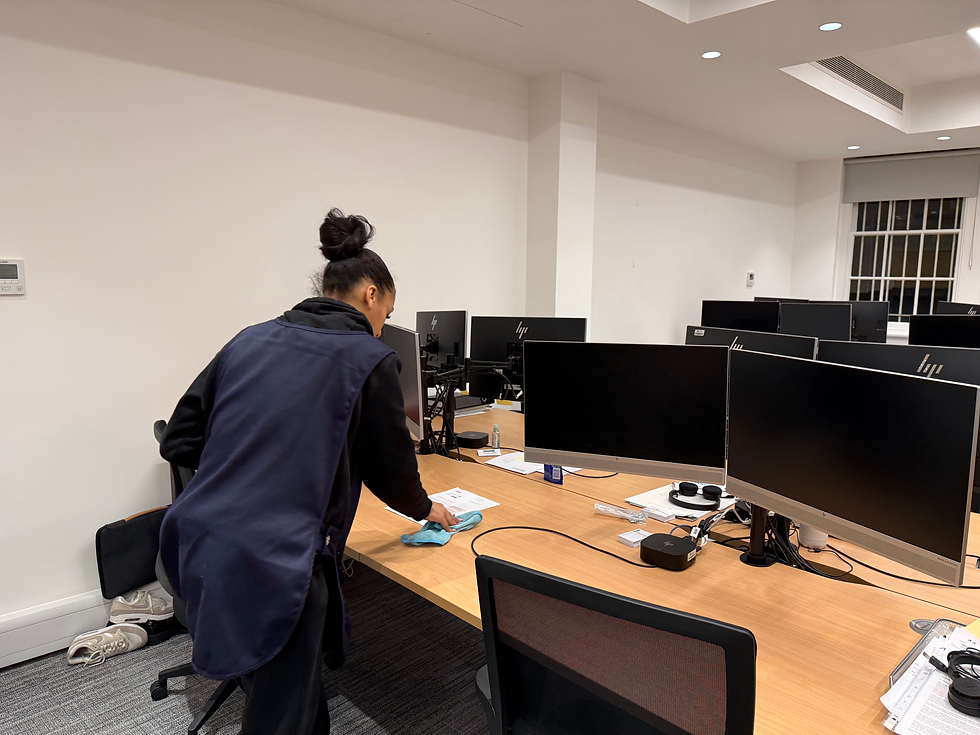
Office Desks and Workstations
The way desks are cleaned depends on how they are used.
Fixed desks generally require less frequent attention than shared workstations.
Hybrid offices and hot-desking environments benefit from more regular cleaning because multiple employees may use the same desk during the week.
Professional desk cleaning usually includes:
Wiping accessible desk surfaces
Dusting
Cleaning telephones (where applicable)
Vacuuming around desks
Emptying desk bins
A clear desk policy also enables cleaners to work more efficiently while protecting confidential documents.
Expert Insight
One of the simplest ways to improve cleaning quality isn't increasing cleaning hours—it's encouraging employees to leave workstations tidy at the end of the day.
A clear desk allows more surfaces to be cleaned thoroughly and safely.
Meeting Rooms
Meeting rooms deserve the same attention as reception areas when clients regularly visit.
Even when they appear clean, sunlight often reveals fingerprints, coffee rings and dust that affect the professional appearance of the room.
Daily cleaning normally includes:
Tables
Chairs
Internal glass
Floors
Waste removal
Spot cleaning
Meeting rooms used continuously throughout the day may benefit from additional attention between bookings.
Looking Beyond Visible Dirt
One of the biggest differences between routine cleaning and professional workplace maintenance is understanding that cleanliness isn't always visible.
Dust behind monitors.
Debris beneath furniture.
Fingerprints on shared touchpoints.
Soil trapped within carpet fibres.
These issues build gradually over time.
Professional cleaning programmes are designed to prevent problems before they become obvious rather than waiting until the office looks dirty.
That proactive approach usually protects both the appearance of the workplace and the lifespan of carpets, flooring and office furniture.
Professional Carpet Cleaning
One of the biggest misconceptions in commercial cleaning is that vacuuming keeps carpets clean.
It doesn't.
Vacuuming removes loose dust, grit and surface debris, but it cannot remove the soil, oils and contaminants that become trapped deep within the carpet fibres over time.
This hidden dirt gradually causes carpets to lose their colour, flatten under foot traffic and wear out much sooner than expected.
For many businesses, commercial carpets represent a significant investment. Replacing them years earlier than necessary is often far more expensive than maintaining them properly.
Professional carpet cleaning is most effective when it's included as part of a planned office cleaning programme rather than booked only when carpets begin to look dirty. If you're exploring a long-term maintenance solution, our Office Cleaning London service explains how we build tailored cleaning schedules that help businesses protect their carpets, flooring and workplace environment.

Recommended Carpet Cleaning Frequency
Area | Recommended Frequency |
Reception | Every 3–6 months |
Corridors | Every 6 months |
Open-plan offices | Every 6–12 months |
Meeting rooms | Every 6 months |
Executive offices | Every 12 months |
High-traffic areas should also be vacuumed daily as part of the regular cleaning programme.
Expert Insight
Many offices don't need more carpet cleaning - they need planned carpet cleaning.
Scheduling professional carpet maintenance before carpets visibly deteriorate usually extends their lifespan and helps maintain a professional appearance throughout the year.
Office Upholstery Cleaning
Office chairs, reception seating and breakout furniture often receive daily use, yet they are commonly overlooked.
Unlike hard surfaces, upholstery absorbs:
Dust
Body oils
Food particles
Coffee spills
Everyday odours
Because contamination builds gradually, furniture can appear acceptable while holding a surprising amount of embedded dirt.
Professional upholstery cleaning not only improves appearance but also helps extend the life of expensive office furniture.

Recommended Frequency
Furniture | Recommended Frequency |
Reception seating | Every 6 months |
Meeting room chairs | Every 6–12 months |
Breakout furniture | Every 6 months |
Executive office seating | Every 12 months |
Expert Insight
Reception furniture often creates one of the strongest first impressions of your business.
Maintaining it properly is usually far less expensive than replacing it.
Office Deep Cleaning
Routine office cleaning keeps the workplace looking presentable from day to day. Deep cleaning serves a different purpose. It targets the areas that are difficult to reach, less frequently used or not practical to include during every routine cleaning visit.
A professional office deep clean may include:
High-level dusting
Cleaning air vents and grilles
Internal glass cleaning
Detailed kitchen cleaning
Washroom descaling
Carpet stain treatment
Upholstery cleaning
Cleaning behind accessible furniture
Machine scrubbing hard floors
Detailed skirting boards and door frames
How Do You Know When Your Office Needs a Deep Clean?
Rather than relying solely on the calendar, look for practical signs.
A deep clean delivers the best results when it's part of a planned maintenance strategy rather than a one-off response to complaints or visible dirt. If you're reviewing your current cleaning arrangements, our Office Cleaning London service explains how we create tailored cleaning schedules that combine routine maintenance with periodic deep cleaning to help businesses maintain consistently high standards throughout the year.
Your office may benefit from a deep clean if:
Carpets still appear dull after vacuuming.
Kitchen grease is becoming difficult to remove.
Washroom fittings show limescale build-up.
Dust is collecting on vents or high-level surfaces.
Upholstered furniture has developed noticeable staining or odours.
You are preparing for an office move, refurbishment, audit or important client visit.
Expert Insight
The most effective deep cleans are planned before the office begins to look tired. Preventative maintenance is almost always more cost-effective than reactive restoration.
Seasonal Office Cleaning
Cleaning requirements change throughout the year. Adjusting your cleaning schedule to reflect seasonal conditions helps maintain consistently high standards.
Spring
Focus on:
High-level dusting
Internal glass
Vent cleaning
Upholstery cleaning
Summer
Increase attention to:
Kitchens
Waste removal
Odour control
Shared breakout areas
Autumn
Prepare for:
Leaves
Increased entrance debris
Wet weather
More frequent entrance cleaning and vacuuming often become necessary.
Winter
Rain, mud and road salt create additional demands on:
Entrance mats
Hard floors
Reception areas
Many London offices benefit from more frequent floor maintenance during winter months.
Practical Workplace Examples
The following examples reflect common commercial cleaning scenarios. Replace them with genuine Silkway Cleaning examples where possible before publishing.
Example 1 – Hybrid Office
A medium-sized London office was cleaned every evening using exactly the same schedule throughout the week.
After reviewing occupancy, it became clear that Tuesdays, Wednesdays and Thursdays were significantly busier than Mondays and Fridays.
Rather than increasing cleaning hours, the schedule was adjusted to provide additional attention on peak attendance days.
The result was a consistently cleaner workplace without increasing overall labour.
Example 2 – Kitchen Complaints
Employees regularly complained that the kitchen felt untidy by lunchtime.
The issue wasn't the quality of the evening clean.
The problem was that waste bins became full before midday.
Introducing a brief daytime waste collection solved the problem without changing the main cleaning programme.
Example 3 – Reception Carpets
An office believed its reception carpet required replacement because it appeared permanently dull.
After introducing a planned maintenance programme combining daily vacuuming with scheduled professional carpet cleaning, the appearance improved significantly and replacement was postponed.
Office Cleaning Schedule Template
Every workplace is different, but the following template provides a useful starting point.
Task | Daily | Weekly | Monthly | Quarterly / Periodic |
Empty bins | ✓ | |||
Clean washrooms | ✓ | |||
Refill soap and toilet paper | ✓ | |||
Clean kitchen surfaces | ✓ | |||
Vacuum high-traffic areas | ✓ | |||
Vacuum low-use offices | ✓ | |||
Dust desks and furniture | ✓ | |||
Clean internal glass | ✓ | |||
High-level dusting | ✓ | |||
Carpet deep cleaning | Every 6–12 months | |||
Upholstery cleaning | Every 6–12 months | |||
Machine scrub hard floors | Every 6–12 months | |||
Office deep clean | Every 6–12 months |
Remember: This is a guide only. The ideal schedule depends on your occupancy, visitor numbers, working patterns and the way your office operates.
Frequently Asked Questions
Is daily office cleaning necessary?
Most occupied offices benefit from daily attention to washrooms, kitchens, bins and high-touch surfaces. Smaller offices with lower occupancy may only require professional cleaning several times each week.
How often should office carpets be professionally cleaned?
Most commercial offices benefit from professional carpet cleaning every six to twelve months.
Reception areas and busy walkways often require more frequent maintenance.
How often should office upholstery be cleaned?
Reception seating, meeting-room chairs and breakout furniture are generally cleaned every six to twelve months depending on usage.
Does hybrid working reduce cleaning requirements?
It can reduce cleaning requirements in low-use desk areas.
However, kitchens, washrooms and communal spaces often still require daily attention because staff tend to attend on the same peak days.
Is deep cleaning different from routine office cleaning?
Yes. Routine cleaning maintains day-to-day cleanliness.
Deep cleaning restores areas that receive less frequent attention and helps protect the long-term condition of the workplace.
Need Professional Office Cleaning in London?
Every office is different, and the right cleaning schedule depends on far more than the size of your workplace. Occupancy levels, visitor numbers, shared facilities, working patterns and the type of business you operate all influence how often cleaning should take place.
If you're unsure whether your current cleaning programme is delivering the right balance of cleanliness, presentation and value, we're happy to help.
At Silkway Cleaning, we work with businesses across London to develop tailored office cleaning programmes based on how each workplace actually operates. Whether you manage a small office, a multi-floor corporate headquarters, a serviced office or a shared workspace, we can recommend a cleaning schedule that suits your business.
We can help with:
Daily office cleaning
Office deep cleaning
Commercial carpet cleaning
Office upholstery cleaning
Washroom hygiene
Kitchen cleaning
Hard floor maintenance
Tailored cleaning schedules
Regular quality inspections
Request a Free Site Survey
If you'd like a professional assessment of your office cleaning requirements, our team will be happy to arrange a free, no-obligation site survey anywhere in London.
Learn more about our Office Cleaning London service.
Or, if you'd prefer to discuss your requirements directly:
📞 020 84881982


Comments